Your website is likely the first employee potential clients meet. If that employee is slow, rigid, or unable to answer complex questions, you lose business. For many startups, a template-based site is a necessary first step. But as your business matures, generic solutions often become the bottleneck restricting your expansion.
At Jeremy Webb – Websites & Graphics, we frequently help businesses transition from restrictive builders to robust, scalable platforms. The debate between custom web development and pre-made templates isn’t just about aesthetics; it is a fundamental business decision regarding asset ownership, security, and long-term Return on Investment (ROI).
If you are serious about scaling your operations in 2025, understanding the architecture behind your digital presence is critical.
The Hidden Costs of Template Websites
Templates—whether on Wix, Squarespace, or a $59 WordPress theme—are designed to appeal to the widest possible audience. To do this, developers pack them with every conceivable feature, slider, and font option, regardless of whether you need them.
This phenomenon is known as “code bloat.”
When a user visits your site, their browser must download all that unused code before rendering the page. According to data from the HTTP Archive, the average weight of mobile web pages has increased significantly over the last five years, largely driven by heavy JavaScript frameworks found in multipurpose themes.
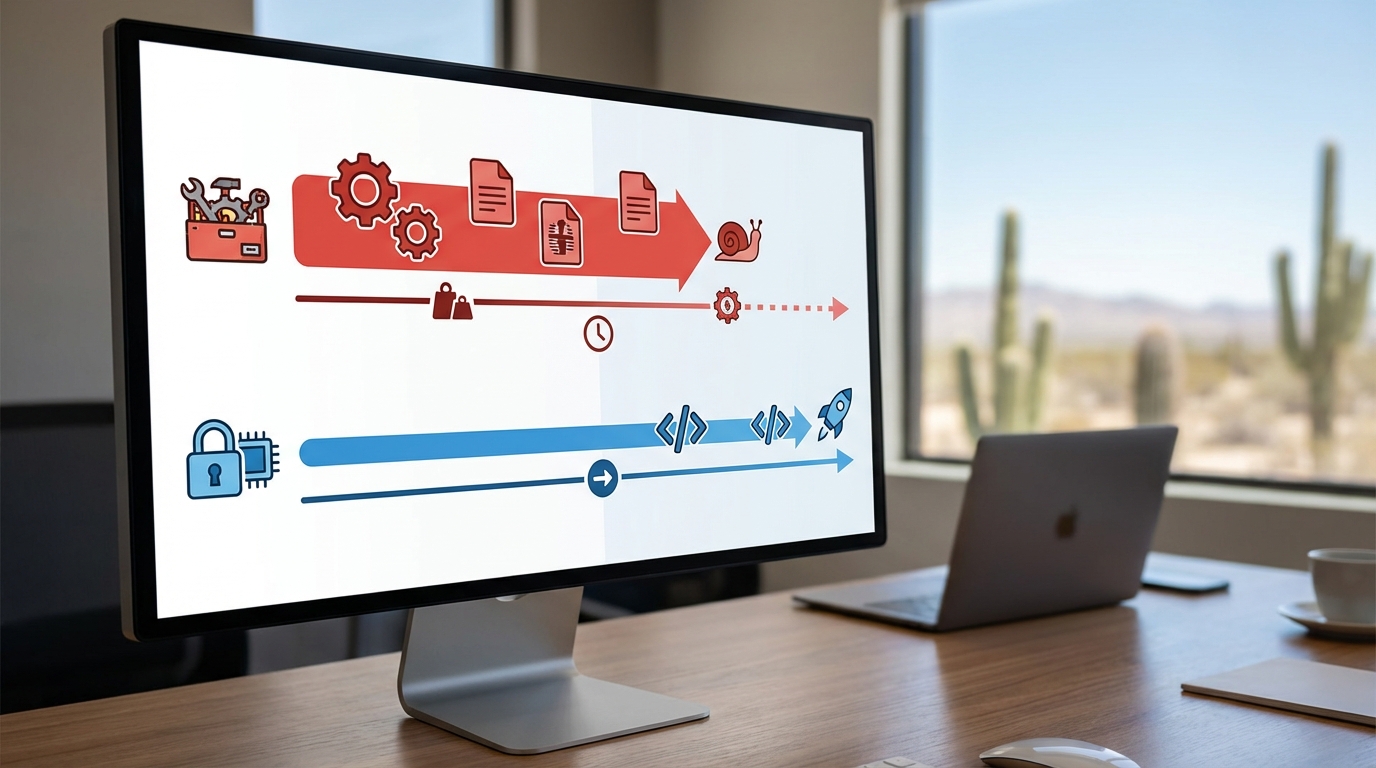
For a growing B2B enterprise, this lag is unacceptable. Slow load times directly correlate with higher bounce rates and lower conversion numbers. While a template saves money upfront, the cost in lost leads over two years often dwarfs the initial savings.
What Is Custom Web Development?
Custom web development does not necessarily mean reinventing the wheel. It means building a digital environment tailored specifically to your business logic, customer journey, and operational needs.
When we build a custom solution, we architect the database and functionality to fit your exact requirements. This approach ensures:
- Lean Code: We only write the code necessary for your specific features, ensuring lightning-fast performance.
- Unique Functionality: Need a client portal that syncs with your specific inventory software? Custom development makes that possible without hacking together five different plugins.
- Brand Integrity: Your design isn’t limited by the constraints of a pre-set grid. We build the site around your brand, not the other way around.
For businesses looking for Website Development Services by Jeremy Webb, this distinction is the key to moving from a “brochure” site to a lead-generation engine.
Speed, SEO, and Core Web Vitals
Google doesn’t care how much money you saved on a theme; it cares about the user experience. In recent years, Google has shifted its ranking algorithm to prioritize Core Web Vitals—metrics that measure loading performance, interactivity, and visual stability.
Achieving high scores on Core Web Vitals is notoriously difficult with heavy, pre-made templates because you cannot easily access or optimize the underlying core files.
In contrast, scalable business websites built with custom code give developers total control over asset delivery. We can optimize images, defer non-critical scripts, and ensure the site renders instantly.
As noted in documentation by Google Search Central, page experience signals are a tie-breaker in search rankings. In a competitive market, a custom site provides the technical foundation required to outrank competitors relying on slow, generic builders.
Security: The WordPress vs Custom Code Debate
Security is a major concern for any business handling client data. The popularity of generic WordPress themes makes them a frequent target for automated attacks. Hackers know exactly where the vulnerabilities lie in popular themes because thousands of sites use the exact same code.
Furthermore, template sites often rely on dozens of third-party plugins to achieve basic functionality. Each plugin is a potential backdoor if not updated or if the developer abandons the project.
A report by Sucuri, a web security company, consistently highlights that outdated plugins and themes are leading entry points for website compromises.
Custom development reduces this attack surface significantly. By building features natively rather than relying on a stack of plugins, we minimize dependencies. This doesn’t mean custom sites are invulnerable, but they are far less likely to fall victim to the automated bot attacks that plague template users.
Scalability and Third-Party Integrations
Growth requires integration. As your business scales, you will likely need your website to talk to other systems: CRM platforms (like Salesforce or HubSpot), ERP systems, or custom inventory databases.
Templates are rigid. Trying to force a template to communicate with a proprietary internal database often results in “spaghetti code”—a messy, unstable patch job that breaks easily.
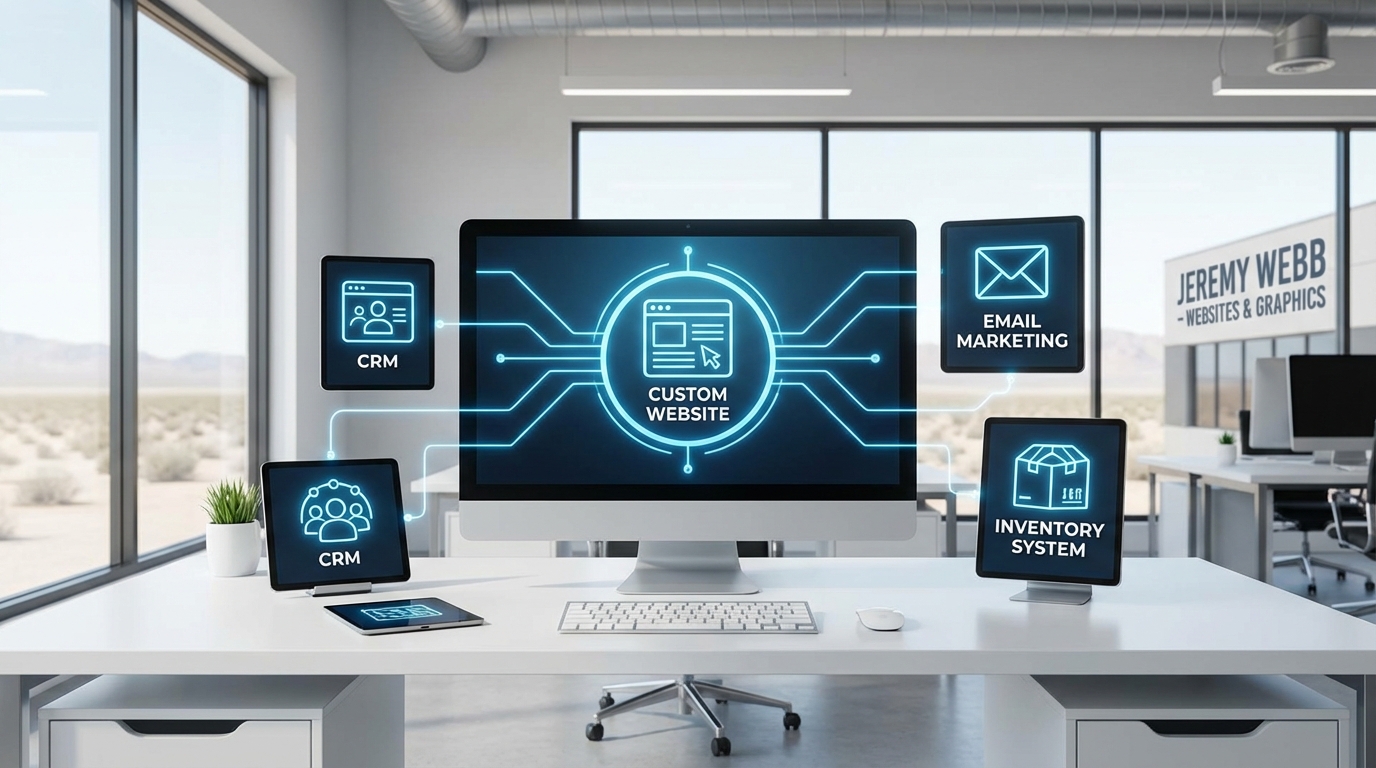
Custom development anticipates this growth. We build APIs and data structures that are ready to shake hands with your other business tools. This creates a unified ecosystem where your website actually reduces your administrative workload rather than adding to it.
For local businesses seeing rapid growth, check out our insights on 3 Ways Kingman Businesses Are Growing in 2025 to see how digital infrastructure plays a role in expansion.
The ROI Verdict: Price vs. Value
Let’s address the elephant in the room: cost.
Yes, custom web development requires a higher initial investment than a template. However, when calculating ROI, you must look at the Total Cost of Ownership (TCO) over three to five years.
- Maintenance: Template sites often break when themes update, requiring constant paid fixes.
- Rebuilds: Most businesses outgrow a template in 18 months, forcing a complete rebuild.
- Conversion: If a custom site increases your conversion rate by even 1% due to better speed and UX, that revenue difference often pays for the build within the first year.
We specialize in Website Design Solutions that are built to last. Instead of renting a layout that thousands of others use, you are investing in a proprietary asset that adds value to your company valuation.
Ready to Build for Growth?
If your current website feels like a straightjacket, it’s time to move on. Don’t let technical limitations dictate your business strategy.
At Jeremy Webb – Websites & Graphics, we build high-performance, secure, and scalable digital experiences tailored to your goals. Whether you are in Mohave Valley, Bullhead City, or expanding nationwide, we have the technical expertise to support your growth.
Contact us today to discuss how a custom web strategy can transform your bottom line.